Saturday, March 3, 2018
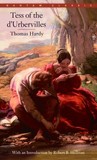 Tess of the d'Urbervilles by Thomas Hardy
My rating: 4 of 5 stars
7.5/10
The first 70 percent of the book I actively disliked. It was the last 30 percent that saved it and actually turned it into an amazing read. I would have given this story one or two stars had not the end been so intelligent. The first part of the book bored and even angered me. I am not a big fan of Thomas Hardy's writing. He wrote pages and pages of expository writing about scenery that for me was very tedious and boring. I did not think it was necessary. He did really well with the dialogue when it was there. The last 30 percent was brilliant writing. It almost felt like another author had picked the pen and wrote the ending.
The book was published in the 1890s at the height of the Victorian Age and right smack dab in the middle of the puritan resurgence. Initially, the characters annoyed me. Tess was angelic in her beauty and manners and had zero flaws. Angel Claire was a perfect gentleman and almost angelic in his mannerisms. Finally, there was Alec D'Urberville who was almost the devil reincarnated. The only character that I sympathized with in the beginning was Tess's mother Joan Derbyfield. I liked her because she had the best advice.
"Don't worry about the past. Keep your head down and mouth shut. Do this and you won't have any problems."
I liked her mother's advice because it seemed to be the right answer for Tess and for many of us today. The ensuing problems of Tess could have been avoided had she only heeded her mother's wise advice. Then I started thinking, was that advice really the best? Even though Tess completely disregarded her mother's advice for wanting to be upfront, was she wrong for wanting to be honest in a situation that wasn't her fault in the least?
At first, I really hated the way Hardy dealt with Victorian and even modern issues of rape, female sexuality, virginity, piousness, and the roles between women and men. The first 70 percent of the book, I seethed as I read, and several times interjected with things like, "How could that idiot do that? or What the freak was that person thinking?"
Then it slowly began to dawn on me the idea that Thomas Hardy was challenging the ideas of his day and the hypocrisy that they lived in. I remember how angered I was at the thought that Claire would leave his wife because she was not technically a virgin, even though she had been raped and had an unwanted and unplanned pregnancy as a result. My first thought was, "How dare he? This would never happen today."
Then I started thinking even more. It does happen today. How many women are forced to marry their rapists in Muslim and Hindu countries. What about the honor killings in both of those cultures that are done on women that lose their virginity outside of marriage whether by consent or rape? What type of hypocrisy does evangelical Christians put on virginity? Think about it. If a boy messes up, then it is usually marked up to an indiscretion or a simple 'boys will be boys' comment. God forbid, if a girl does the same thing. I love seeing those hypocritical fathers that wear t-shirts that say, "If you want to date my daughter remember that I have a shotgun and a shovel, and I am not afraid to use them."
Maybe, we are still not that far removed from Hardy's time, a little more than one-hundred years ago. Tess of the D'Urbervilles teaches many things. It shows the consequences of our actions. Tess may have been melodramatically written and flawless, but throughout the story she changes into a passionate and desperate woman just wanting to be loved. She was rejected by her husband and adored by the person that she should have despised. The reader realizes that she is at-fault for her actions. She made her bed and decided to lie in it. There were many avenues and choices that she could have done to prevent her ending, but she chose it, and unfortunate or fortunately, had to pay the consequences.
I thought the ending was simply marvelous! Hardy wrote an ending that felt satisfying in the best sense of the word! My heart went out to both Angel Claire and to Tess, which was a feat because I actively disliked each character with enough passion that I thought it impossible for my mind to be changed, but Hardy managed the impossible and made me a fan of his book.
Tess of the d'Urbervilles by Thomas Hardy
My rating: 4 of 5 stars
The first 70 percent of the book I actively disliked. It was the last 30 percent that saved it and actually turned it into an amazing read. I would have given this story one or two stars had not the end been so intelligent. The first part of the book bored and even angered me. I am not a big fan of Thomas Hardy's writing. He wrote pages and pages of expository writing about scenery that for me was very tedious and boring. I did not think it was necessary. He did really well with the dialogue when it was there. The last 30 percent was brilliant writing. It almost felt like another author had picked the pen and wrote the ending.
The book was published in the 1890s at the height of the Victorian Age and right smack dab in the middle of the puritan resurgence. Initially, the characters annoyed me. Tess was angelic in her beauty and manners and had zero flaws. Angel Claire was a perfect gentleman and almost angelic in his mannerisms. Finally, there was Alec D'Urberville who was almost the devil reincarnated. The only character that I sympathized with in the beginning was Tess's mother Joan Derbyfield. I liked her because she had the best advice.
"Don't worry about the past. Keep your head down and mouth shut. Do this and you won't have any problems."
I liked her mother's advice because it seemed to be the right answer for Tess and for many of us today. The ensuing problems of Tess could have been avoided had she only heeded her mother's wise advice. Then I started thinking, was that advice really the best? Even though Tess completely disregarded her mother's advice for wanting to be upfront, was she wrong for wanting to be honest in a situation that wasn't her fault in the least?
At first, I really hated the way Hardy dealt with Victorian and even modern issues of rape, female sexuality, virginity, piousness, and the roles between women and men. The first 70 percent of the book, I seethed as I read, and several times interjected with things like, "How could that idiot do that? or What the freak was that person thinking?"
Then it slowly began to dawn on me the idea that Thomas Hardy was challenging the ideas of his day and the hypocrisy that they lived in. I remember how angered I was at the thought that Claire would leave his wife because she was not technically a virgin, even though she had been raped and had an unwanted and unplanned pregnancy as a result. My first thought was, "How dare he? This would never happen today."
Then I started thinking even more. It does happen today. How many women are forced to marry their rapists in Muslim and Hindu countries. What about the honor killings in both of those cultures that are done on women that lose their virginity outside of marriage whether by consent or rape? What type of hypocrisy does evangelical Christians put on virginity? Think about it. If a boy messes up, then it is usually marked up to an indiscretion or a simple 'boys will be boys' comment. God forbid, if a girl does the same thing. I love seeing those hypocritical fathers that wear t-shirts that say, "If you want to date my daughter remember that I have a shotgun and a shovel, and I am not afraid to use them."
Maybe, we are still not that far removed from Hardy's time, a little more than one-hundred years ago. Tess of the D'Urbervilles teaches many things. It shows the consequences of our actions. Tess may have been melodramatically written and flawless, but throughout the story she changes into a passionate and desperate woman just wanting to be loved. She was rejected by her husband and adored by the person that she should have despised. The reader realizes that she is at-fault for her actions. She made her bed and decided to lie in it. There were many avenues and choices that she could have done to prevent her ending, but she chose it, and unfortunate or fortunately, had to pay the consequences.
